



Opioid Receptor
Opioid receptors are a group of G protein-coupled receptors with opioids as ligands. The endogenous opioids are dynorphins, enkephalins, endorphins, endomorphins and nociceptin. Opioid receptors are distributed widely in the brain, and are found in the spinal cord and digestive tract. Opioid receptors are molecules, or sites, within the body that are activated by opioid substances. Opioid receptors inhibit the transmission of impulse in excitatory pathways within the human body system. These pathways include the serotonin, catecholamine, and substance P pathways, which are all implicated in pain perception and feelings of well-being. Opioid receptors are further subclassified into mu, delta, and kappa receptors. All the classes, while exhibiting differing modes of action, share some basic similarities. They all are driven by the potassium pump mechanism, which is found on the plasma membrane of the majority of cells.
Opioid Receptor Isoform Specific Products
All Product Categories
-
Opioid Receptor Inhibitors
(23)
View all products
-
Opioid Receptor Agonists
(300)
View all products
-
Opioid Receptor Antagonists
(129)
View all products
-
Opioid Receptor Activators
(31)
View all products
-
Opioid Receptor Modulators
(28)
View all products
-
Opioid Receptor Controls
(7)
View all products
-
Opioid Receptor Ligands
(9)
View all products
-
Opioid Receptor Related Products (614)
Related Products (614)

-
Antibodies (3)
-
Opioid Receptor Isoform Comparison
-
(D-Met2,Pro5)-Enkephalinamide
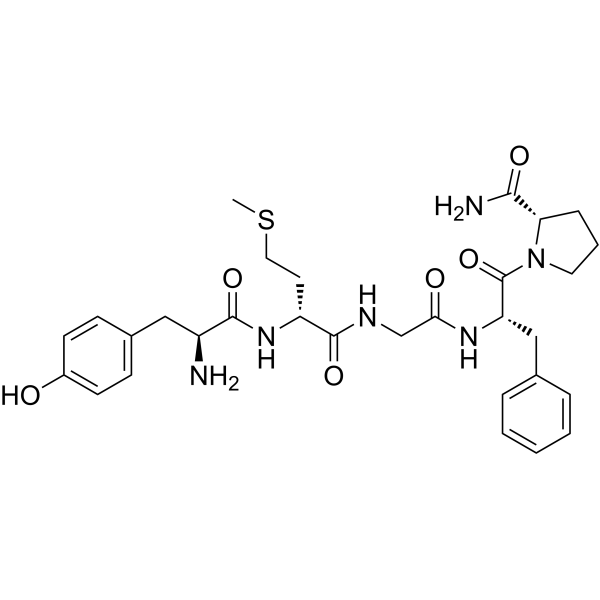 0 ImagesCat. No.: HY-P3547CAS No.: 63307-63-1(D-Met2,Pro5)-Enkephalinamide is a highly potent opiate agonist, and shows antinociceptive activity.
-
Nalmefene Sulfate-d3
 0 ImagesCat. No.: HY-W754114Nalmefene Sulfate-d3 is the deuterium labeled Nalmefene (HY-107744). Nalmefene is a BBB-penetrable opioid receptor modulator. Nalmefene is an antagonist of MOR and DOR, and a partial agonist of KOR. Nalmefene has anti-inflammatory and neuroprotective activities. Nalmefene can be used in the research of reducing alcohol-dependent disorders.
-
Anrikefon
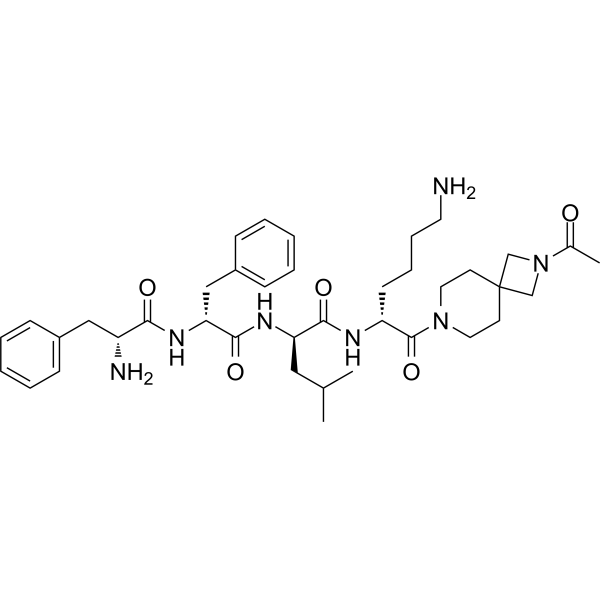 0 ImagesCat. No.: HY-P3445CAS No.: 2269511-95-5Synonyms: HSK21542Anrikefon is a peripherally restricted kappa opioid receptor (KOR) agonist, with an IC50 of 0.54 nM, an EC50 of 2.41 pM, and a Ka of 0.068 nM against human KOR, and it exhibits high selectivity over μ and δ opioid receptors. Anrikefon exerts analgesic effects by inhibiting behaviors associated with inflammatory, postoperative and neuropathic pain, and also exerts antipruritic effects by reducing itch-related behaviors. Anrikefon can be used in research on pain, pruritus, and pruritus associated with chronic kidney disease.
-
SLL-022CCP
 0 ImagesCat. No.: HY-184476CAS No.: 2084834-44-4SLL-022CCP is a KOR-selective, high affinity and extremely potent agonist with an EC50 of 9.1 nM and a Ki of 2.0 nM. SLL-022CCP inhibits cAMP production with an EC50 of 0.002 nM, and exhibits high receptor subtype selectivity over the μ-opioid receptor (MOR, EC50 = 1.6 nM) and δ-opioid receptor (DOR, EC50 = 30.0 nM). SLL-022CCP exhibits robust antinociceptive and antipruritic effects with low central side effects.
-
FK 33-824
 0 ImagesCat. No.: HY-P2018CAS No.: 64854-64-4FK 33-824, a synthetic analogue of Met-enkephalin, is a selective agonist of the μ-opioid receptor (μ-OR).
-
CSD-CH2(1,8)-NH2
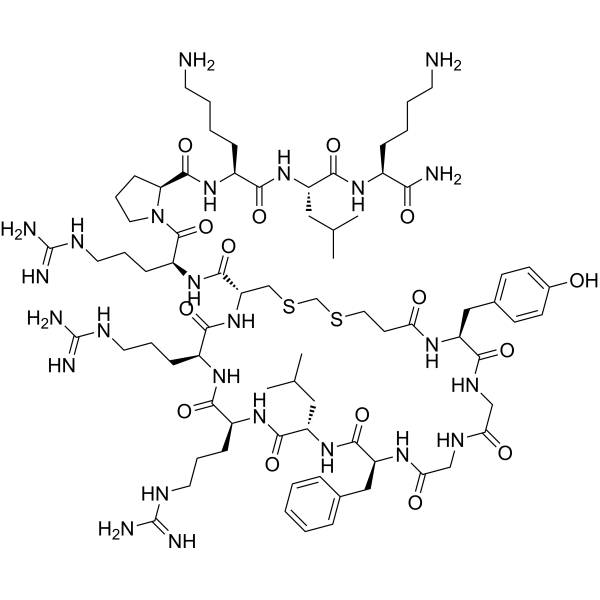 0 ImagesCat. No.: HY-P5756CAS No.: 3032600-19-1CSD-CH2(1,8)-NH2 is a selective and competitive KOR antagonist (Ki: 6.8 nM). CSD-CH2(1,8)-NH2 inhibits calcium mobilization in DRG neurons. CH2(1,8)-NH2 antagonizes the antinociceptive effect of U50,488. CSD-CH2(1,8)-NH2 can be used for research of neuropsychiatric disorders.
-
Naloxonazine
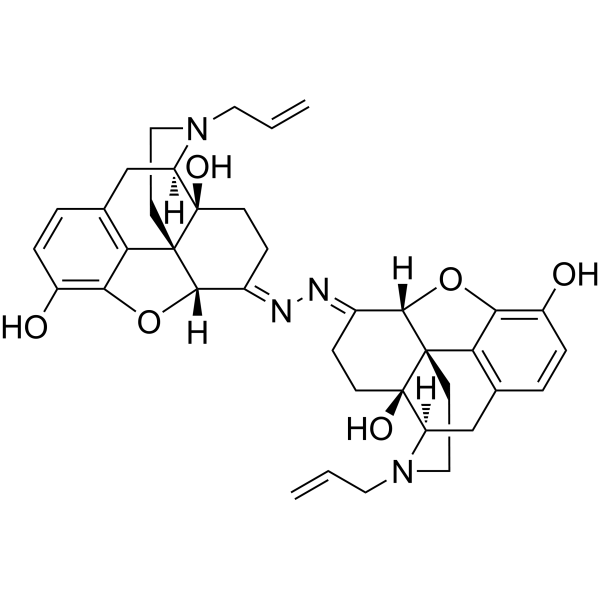 0 ImagesCat. No.: HY-137180CAS No.: 82824-01-9Naloxonazine is a potent and selective opiate mu-1 antagonist that can also affect leishmania by regulating host coding function.
-
Vanilpyruvic acid (Standard)
 0 ImagesCat. No.: HY-101416RCAS No.: 1081-71-6Synonyms: Vanylpyruvic acid (Standard)Vanilpyruvic acid (Standard) is the analytical standard of Vanilpyruvic acid. This product is intended for research and analytical applications. Vanilpyruvic acid is a catecholamine metabolite and precursor to vanillactic acid.
-
Amdakefalin
 0 ImagesCat. No.: HY-109166CAS No.: 2253747-71-4Amdakefalin is a μ and δ opioid receptors agonist with analgesic effects.
-
μ/κ/δ opioid receptor agonist 1
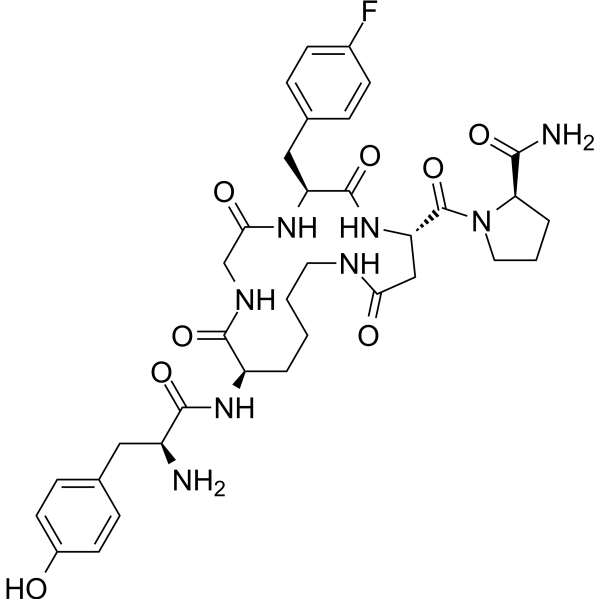 0 ImagesCat. No.: HY-P10203μ/κ/δ opioid receptor agonist 1 is a μ opioid receptor (MOR), κ opioid receptor (KOR), and δ opioid receptor (DOR) agonist. μ/κ/δ opioid receptor agonist 1 produces a strong and long-lasting analgesic effect through peripheral MOR and KOR in the tail-flick test.
-
Dafphedyn
 0 ImagesCat. No.: HY-P2579CAS No.: 111846-43-6Dafphedyn is an analogue of Dynorphin (1-13). Dafphedyn has diuretic and profound analgesia effects that can be antagonized by centrally administered Naltrexone (HY-76711) or Naloxone (HY-17417A).
-
BPR1M492
 0 ImagesCat. No.: HY-184490CAS No.: 3118558-91-8BPR1M492 is a brain-penetrant μ-opioid receptor (MOR) agonist an in vitro EC50 of 0.93 nM in the cAMP inhibition assay and 0.004 nM in the FLIPR Ca2+ assay without a clear signaling bias between cAMP and β-arrestin-2 pathway. BPR1M492 is a cAMP-biased nociceptin-orphanin FQ opioid peptide agonist. BPR1M492 is a weak cAMP-biased δ/κ-opioid receptor agonist. BPR1M492 demonstrates potent in vivo antinociception and can be used for pain research.
-
ZP 120C
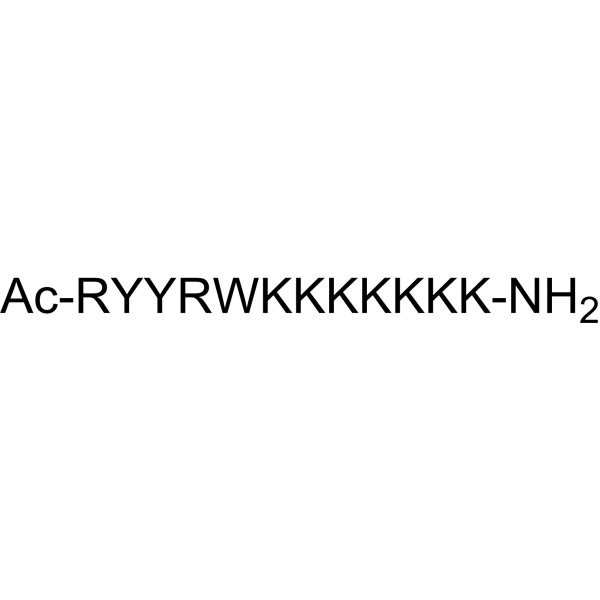 0 ImagesCat. No.: HY-106234CAS No.: 383123-18-0ZP 120C is a potent and partial ORL1 receptor agonist. ZP 120C inhibits electrically induced contraction. ZP 120C can be used in the research of hyponatremia/hypokalemia.
-
SYK-1106 dihydrochloride
 0 ImagesCat. No.: HY-180212ASYK-1106 dihydrochloride is a selective δ opioid receptor (DOR) agonist with an EC50 of 0.089 nM. SYK-1106 dihydrochloride shows high selectivity over MOR and KOR. SYK-1106 dihydrochloride exhibits antidepressant-like effects in the mouse forced-swimming tests. SYK-1106 dihydrochloride can be used for the research of depression.
-
LY-99335
 0 ImagesCat. No.: HY-115844CAS No.: 78738-97-3LY-99335 is an anesthetic antagonist with behavioral inhibitory activity. LY-99335 exhibits large dose separation at specific doses, indicating its potential in anesthetic antagonism.
-
Matrine (Standard)
 0 ImagesSynonyms: Matridin-15-one (Standard); Vegard (Standard); α-Matrine (Standard)Matrine (Standard) is the analytical standard of Matrine. This product is intended for research and analytical applications. Matrine (Matridin-15-one) is an alkaloid found in plants from the Sophora genus that can act as a kappa opioid receptor and u-receptor agonist. Matrine has a variety of pharmacological effects, including anti-cancer, anti-oxidative stress, anti-inflammation and anti-apoptosis effects. Matrine is potential in the research of disease like human non-small cell lung cancer, hepatoma, papillary thyroid cancer and acute kidney injury (AKI).
-
Tyr-Ala-N-(1,3-dimethylbutyl)glycinamide
 0 ImagesCat. No.: HY-182563CAS No.: 72732-17-3Tyr-Ala-N-(1,3-dimethylbutyl)glycinamide is a μ/δ opioid receptor ligand with high μ opioid receptor selectivity and agonist activity. Tyr-Ala-N-(1,3-dimethylbutyl)glycinamide has an IC50 of 237 nM for μ receptors and 1050 nM for δ receptors. Tyr-Ala-N-(1,3-dimethylbutyl)glycinamide shows Ki values of 17 nM for μ receptors and 480 nM for δ receptors. Tyr-Ala-N-(1,3-dimethylbutyl)glycinamide inhibits electrically evoked contractions of guinea pig ileum and mouse vas deferens. Tyr-Ala-N-(1,3-dimethylbutyl)glycinamide serves as a starting compound for structure-activity relationship investigations of μ receptor recognition.
-
3-Carboxamidonaltrexone
 0 ImagesCat. No.: HY-170033CAS No.: 421552-35-43-Carboxamidonaltrexone (example 32) is a opioid receptor binding compound with Ki values of 1.9 nM, 110 nM, and 22 nM for μ-opioid receptor, δ-opioid receptor, and K-opioid receptor, respectively.
-
Eseroline
 0 ImagesCat. No.: HY-W856819CAS No.: 469-22-7Eseroline is a potent μ-opioid receptor agonist, which is the hydrolytic metabolite of Physostigmine (HY-N6608). Eseroline is a selective and competitive acetylcholinesterase (AChE) inhibitor, with its Ki values for AChE and BuChE being 0.1 μM and 200 μM respectively. Eseroline has nicotinic acetylcholine receptor allosteric enhancing ligand (nAChR-APL) activity, meaning it does not activate the receptor but significantly enhances the signal transduction of Ach triggered by the receptor. Eseroline is neurotoxic, causing cell membrane damage (LDH leakage) and energy metabolism collapse (ATP depletion). Eseroline can be used for the study of Alzheimer's disease.
-
ITI-333
 0 ImagesCat. No.: HY-163669CAS No.: 2117619-00-6ITI-333 is a tetracyclic compound with oral bioavailability and analgesic activity, targeting multiple receptors. ITI-333 can be used for research on various forms of pain.




